A head keeps its spray pattern
A pop up head sits just above the soil, and a trimmer takes the top off one in a single pass. Grass is cut back around a head instead of over it, so the head keeps its arc and the zone keeps its coverage.
A mower deck cuts open lawn and stops at the first obstacle. Trimming covers everything the deck has to steer around, which is why the two run on the same visit and why a finished lawn is one height across the whole property.
Trimming is not a separate booking and it does not get dropped when a visit is running long. It is the difference between a lawn that has been cut and a lawn that has been finished.

This is the most common injury a tree in a lawn takes, it is done a little at a time by people who are looking after the yard, and it does not heal.
The living tissue that moves water up from the roots and sugar down from the canopy sits in a thin layer immediately under the bark. A trimmer line running at speed strips bark off the base of a trunk, and that layer goes with it. It does not grow back. Each visit takes a little more, and when the damage finally runs the whole way round the trunk the path between the roots and the leaves is cut.
What follows is slow enough that nobody connects the two. The canopy thins from the top down over several years, limbs die back, and a tree that was healthy is taken out for reasons nobody traces to a lawn tool.
The fix is not careful trimming. It is keeping the trimmer away from the trunk altogether, and that means stopping the grass short of the tree rather than cutting grass that grows against it.
An irrigation system is easy to damage with a trimmer, and a broken head shows up as a brown patch two weeks later. The parts that matter all sit at ground level, which is exactly where the line is running.
A pop up head sits just above the soil, and a trimmer takes the top off one in a single pass. Grass is cut back around a head instead of over it, so the head keeps its arc and the zone keeps its coverage.
Grass grows over a valve box until nobody can find it, which matters on the day a zone has to be shut off. The lids are trimmed around and left where they can be seen.
Low voltage lighting, a well head, a drip line or a buried pet fence is easy to miss on a first visit. Point it out and it goes on the notes for the property, so the crew knows next time.
Neither job finishes a property on its own. Run on the same visit they leave one height across the whole lot with no strip of tall grass anywhere.
A mower deck is built to cut a wide even pass across open lawn. It has to stop wherever there is an obstacle, and it cannot cut closer to a fence or a wall than its own housing allows. Everything the deck steers around is what the trimmer exists for.
That is why the two are never split across separate visits. A lawn mowed one week and trimmed the next never looks right in either week: there is a collar of long grass around the mailbox, a line of it down the fence, and a strip under the hedge that the deck could not reach.
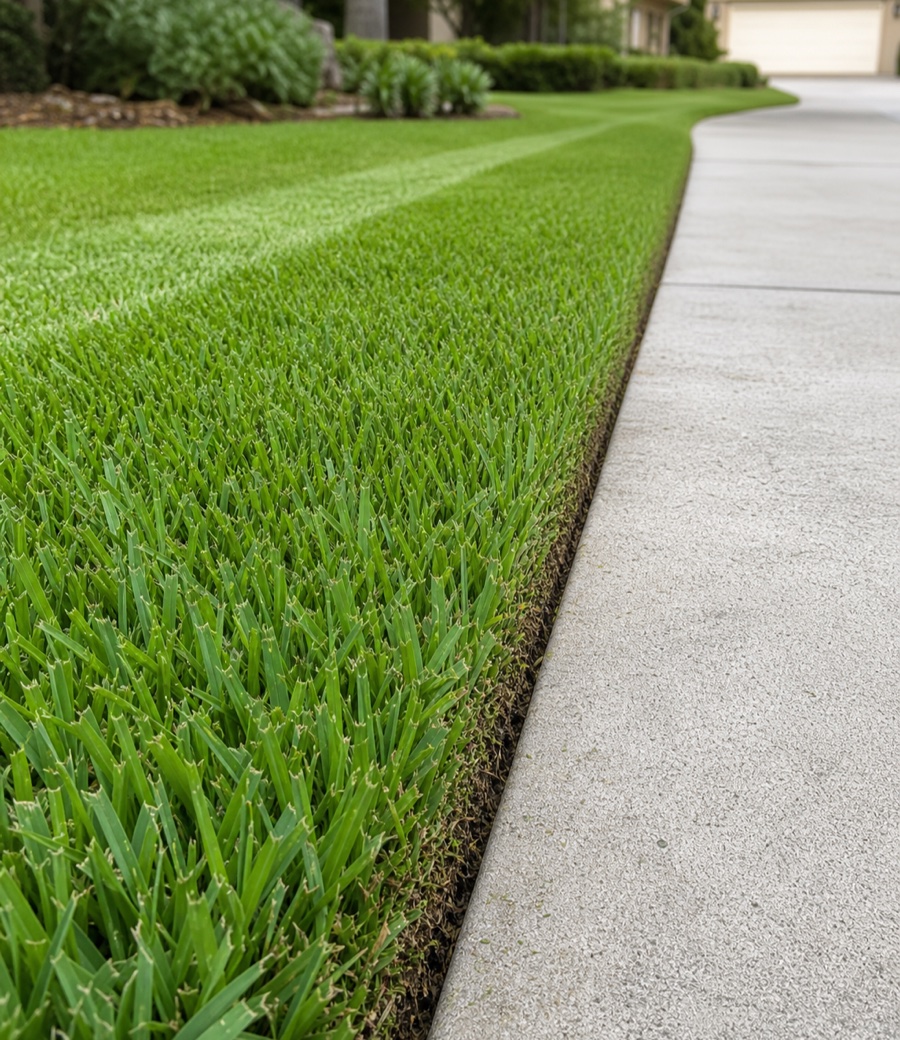
Trimming is also what lets the edging read. The trimmer takes growth off the top of the concrete and the edger cuts the line down into the ground, and it is those two together that give a maintained lawn a visible boundary where a mowed one usually has a fade.
These three run on the same visit as the trimming. Together the four of them are the regular maintenance schedule.
Call us and we will come out and walk the property. Show us the fence line, the trees, the equipment pads and the sprinkler heads, and we will tell you what we would do and how often. There is no obligation once you have it.
Seven days a week, 9:00 AM to 5:00 PM. Email cjackc.inc@gmail.com.